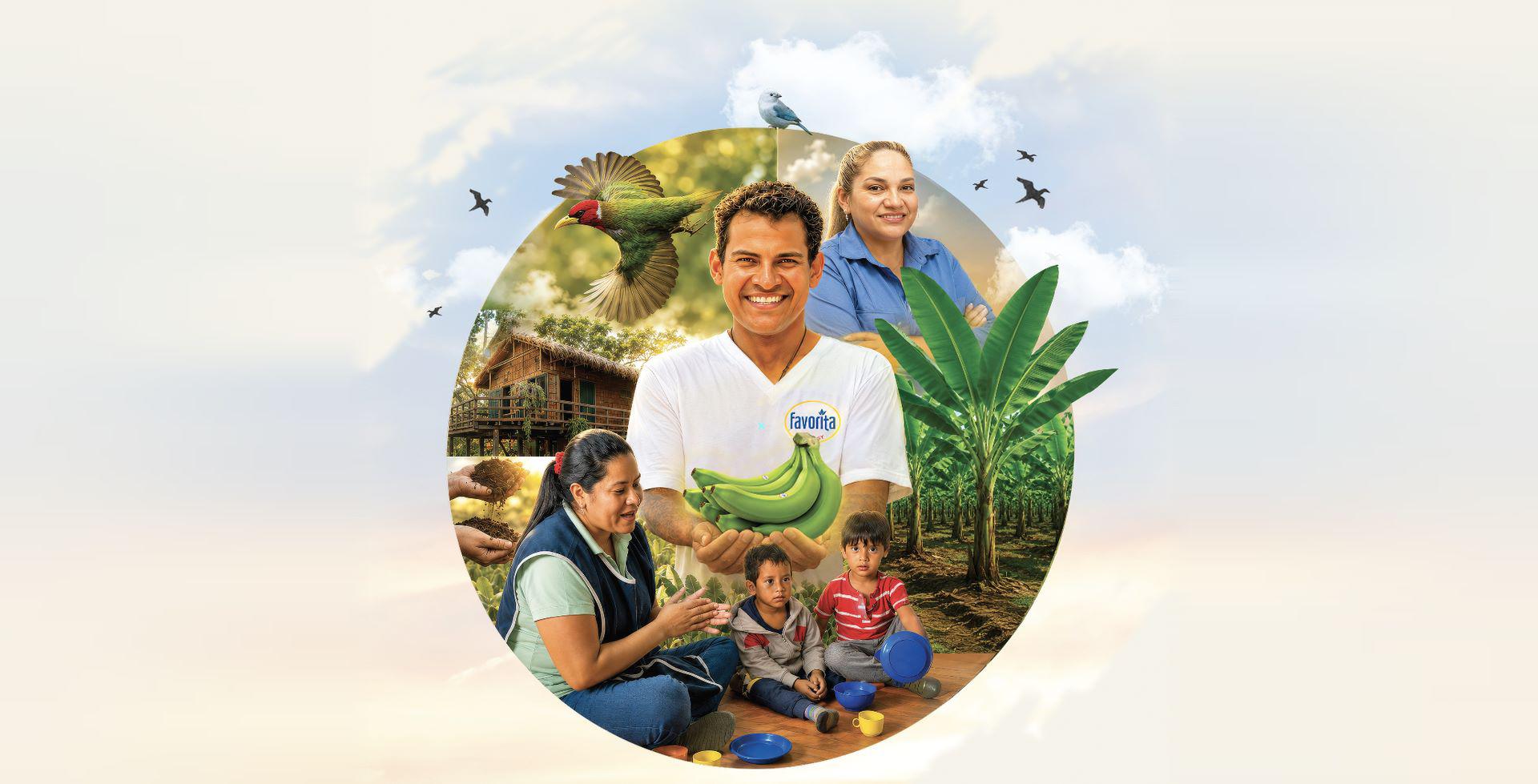
Reybanpac Publishes Its 2024–2025 Sustainability Report
2026-08-14Reybanpac has published its biennial sustainability report for 2024 and 2025, prepared in accordance with the Global Reporting Initiative (GRI) standards. The new report details the company’s environmental and social best practices across its banana division, in line with its purpose of nurturing people and cultivating well-being.
José Antonio Vargas, general manager, states that, despite the challenges, Reybanpac has reaffirmed its commitment to sustainable and resilient management through three key pillars: nurturing our people, cultivating responsibly and growing stronger communities.
Among the progress achieved, he highlights: “We have optimized water use in our operations; we implemented irrigation water disinfection systems as a preventive biosafety measure; and we strengthened our precision agriculture practices to conserve soil and optimize the use of agricultural inputs.”
One of the key pillars of Reybanpac’s sustainable management is the well-being of its people: by the end of 2025, the company had created nearly 6,000 jobs, making it one of Ecuador’s largest employers. For all employees, the company provides a work environment that promotes overall well-being and satisfaction through safe working conditions, training and professional development programs, and a culture of respect and equality.
Among the environmental milestones highlighted in the report is the elimination of nematicide use through the application of microorganisms to 100% of Reybanpac’s crops, thereby caring for the soil in a responsible and sustainable manner.
Likewise, Reybanpac has installed 32 water disinfection systems for surface water used for irrigation, thereby strengthening its capacity for disease prevention and plant health management in its operations.
Furthermore, currently, 98.14% of Reybanpac’s plantations use subfolic or subfolic micro-sprinkler irrigation, which have helped reduce water consumption per cycle and per hectare, achieving savings of 59,276 m³ per irrigation cycle.
At the community level, the company continued to undertake initiatives focused on five areas: rural education, community development, local leadership, women’s empowerment, and strengthening young people’s productive skills. Regarding this last area, the AGROFUTURO program, developed in partnership with the Wong Foundation, reached 170 graduates as Banana Technical Assistants in 2025. This initiative aims to develop productive skills among young people aged 15 to 29 in the provinces of Los Ríos and Santo Domingo to facilitate their entry into the workforce or the creation of businesses that enable them to secure their livelihoods.
Reybanpac’s sustainability report is available to the public in digital format on the website: https://www.favoritabananas.com/en/memoria_de_sostenibilidad_2024_2025