Education and Nutrition: Transforming Rural Communities
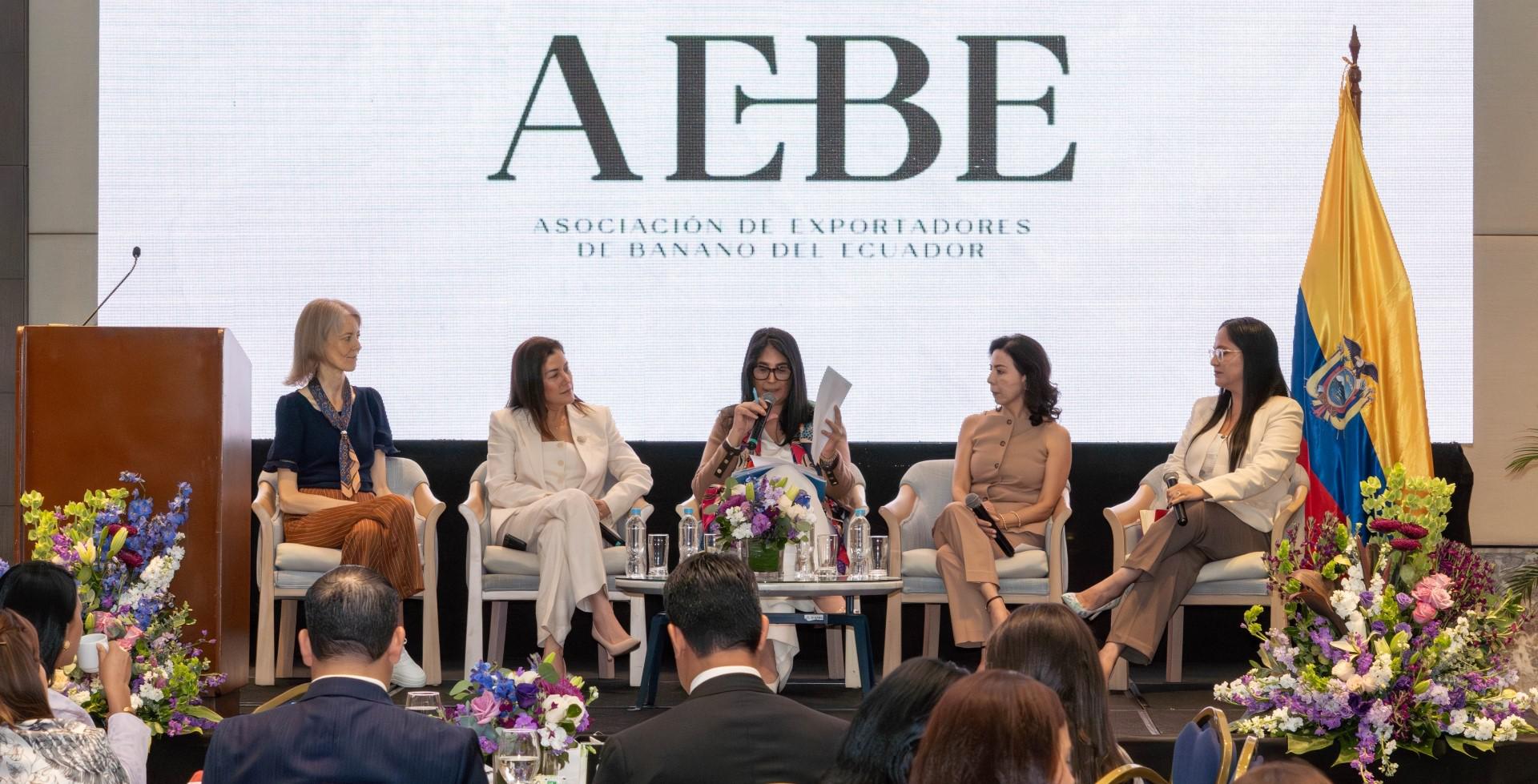
2026-05-21On May 20, the event Sembradoras de Futuro (“Sowers of the Future”) was held by the Association of Banana Exporters of Ecuador (AEBE) in commemoration of the International Year of Women Farmers 2026. Supported by the Food and Agriculture Organization of the United Nations (FAO) and UN Women Ecuador, the event brought together leaders from across the agro-export sector to recognize the vital role women play in food security and economic development.
As part of the agenda, the panel “Leadership with Purpose: Nutrition and Social Development” was held, featured Gisella Wong, director of our business group and board member of the Wong Foundation, who shared the company’s long-term vision for social development and well-being in Ecuador’s rural communities. The discussion was moderated by Miriam Bandes, representative of UN Women Ecuador, and included participation from Marianela Ubilla, Vice President of AEBE and CEO of Agzulasa; Lianne Zoeteweij, General Manager of the Association of Small Banana Producers of El Guabo (ASOGUABO); and Julissa Villanueva, Regional Editor of Forbes Ecuador.
During her remarks, Gisella Wong emphasized that social responsibility at REYBANPAC is deeply rooted in the legacy and vision of the company’s founder, Segundo Wong Mayorga, who established the Wong Foundation in 1993 to support the development of rural communities through education.
“He created the Foundation long before concepts such as corporate social responsibility became widely recognized. He did it from the heart, driven by a genuine desire to give back to the communities that witnessed his growth as an entrepreneur,” she shared.
She also highlighted that, since its inception, the Foundation has embraced a holistic approach centered on nutrition, education, decent work, and community well-being. “This is not simply a program; it is an ecosystem where business, education, local communities, and a deeply committed family come together with a shared purpose,” she noted.
Since 1993, more than USD 30 million has been invested in social and educational initiatives focused primarily on rural communities in Los Ríos province.
Among the Foundation’s flagship initiatives are its Child Development Centers, which currently provide nutrition, care, and early stimulation to 180 children between the ages of one and three. These centers also play a critical role in supporting rural women—many of whom are agricultural workers and heads of household—by giving them peace of mind while they work. “Through our Child Development Centers, we support mothers so they can pursue their work knowing their children are in a safe and nurturing environment,” she explained.
Another key pillar highlighted was the network of three rural educational units promoted by the Wong Foundation, where more than 600 children and adolescents receive academic instruction grounded in values, leadership, and personal development.
Gisella Wong also underscored the impact of Agrofuturo, the dual technical education program that connects rural youth with meaningful employment opportunities in the agricultural sector. “To date, more than 300 young people have graduated from the program, and around 200 are already employed in agricultural roles across different companies, while others have launched their own entrepreneurial initiatives within their communities,” she stated.
One of the most significant figures shared during the panel was the growing participation of women in these training programs. Today, 36% of Agrofuturo graduates are women. “That reflects the resilience and determination of women in our region, who are actively shaping the future,” she affirmed.
To conclude, Gisella Wong reiterated the importance of viewing social investment as a long-term commitment to national development. “Investing in education is not an expense; it is a way of transforming communities and, ultimately, transforming the country,” she concluded.
As the event concluded, FAO recognized Gisella Wong and other female producers and leaders for their contributions as agents of change in the transformation of agri-food systems. REYBANPAC also joined the signing of the Compromiso Sembradoras 2027 (“Sowers 2027 Commitment”), reaffirming the company’s commitment to strengthening women’s participation in the banana industry and advancing a more inclusive, competitive, and sustainable value chain.